Some of my favorite years as a therapist were spent at a residential facility. My clients were all boys, ages 6-9, who’d been through multiple traumas. As a result they were difficult: always on guard, ready to defend against threats that no one else could see.
It was often challenging to engage these kids in therapy. One of my favorite tools for catching their interest was books. I would read picture books at the library with an eye out for therapeutic lessons or opportunities. I loved using books in session because they helped kids feel less on the spot and provided a path into challenging conversations.
In Solution-Focused Therapy, there is a tool called the Miracle Question. Each therapist may develop their own style or spin the question in new ways for different clients, but the basic concept stays the same. If you woke up tomorrow and a miracle had fixed all your problems, what would be different? Ideally, the response helps the client clarify what needs to change in their life, and spurs conversation about what steps they could take toward that change.
In therapy sessions with children, this question can be challenging. Children have little control over many aspects of their lives.
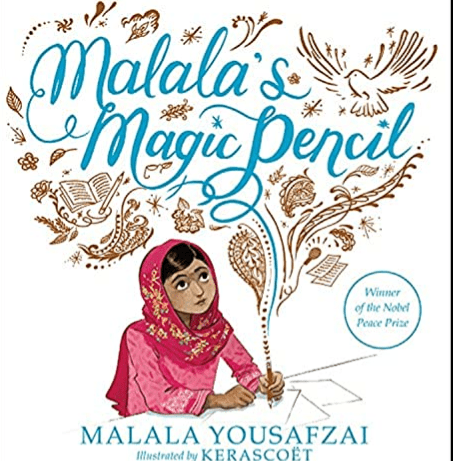
I found a book, Malala’s Magic Pencil, which gave me a perfect in for the Miracle Question. Malala Yousafzai wrote a story about a cartoon she watched during childhood. The main character was a boy who could use a magic pencil to draw anything he wanted or needed, and it would come to life. Malala imagines drawing a lock on her door for privacy, a new ball for her siblings to play with, and pretty new dresses for her mother. It was easy to read this book with the boys and ask them: If you had a magic pencil, what would you draw? Their answers were often poignant. One boy thought it through for a moment before explaining his vision.
“I would draw Bruno Mars.”
He noticed my inquisitive look.
“I mean, I would draw Bruno Mars, and then he would come to life, and he would be here, and he would help me with my career. Help me work on my singing and dancing.”
“You would get help with your singing and dancing. Then what?”
“I would have a career.”
“I mean, after you drew Bruno Mars, what would you draw next?”
“Oh. I would draw whatever people want. I would ask the people here what they want and draw it for them.”
In this case, the miracle question didn’t draw out a goal that was actionable in therapy, but it showed me a lot about this child’s generous heart and need for support and guidance.
Later in the book, Malala sees poor children in her neighborhood one day and learns that she’s fortunate–not every child in her community has enough food to eat, and some don’t go to school because they work to support their families. This motivates her to work harder in school. She dreams less of a magic pencil and uses the real pencil in her hand to spread the word when the Taliban comes to her city and bans girls from going to school.
Malala suffered trauma at the hands of terrorists. My clients suffered trauma at the hands of people close to them, often their own parents and relatives. But they could connect to Malala through her story of recovery. She spoke up, found her voice, her strength, and her supports, and went on to live a full and powerful life. This book is a great tool for modeling recovery from trauma and for helping kids articulate the lives they want for themselves.

 A Therapist's Book Club