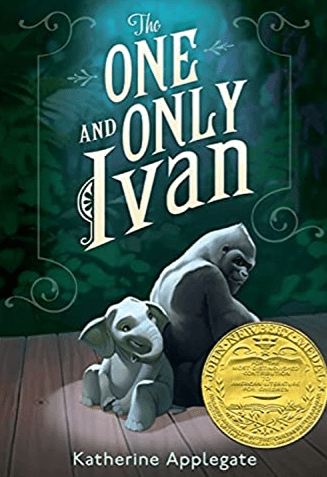
This book is the one where I got serious about more ambitious bibliotherapy projects. A client and his mom told me about a book they read to learn about compassion and empathy. It was about an elephant in captivity and his animal friends.
“Cool,” I said. “We can read it in group.”
I requested the book from the library and was stunned to find a thick novel waiting for me on the hold shelf. At 300 pages, it was not what I expected. I was not optimistic. It was a challenge to get my group members (all boys, ages 6-9) to focus and meaningfully participate for thirty minutes at a time, let alone read a novel together. I thumbed through and noticed that it was written in a poetic style, with few words per page. I checked and learned the audiobook was only three hours. This seemed less dire. Maybe it could work with the group.
I broke the book down into twelve sections and made a character list. From there, I decided to wing it. Every week, we listened to a 15-minute section of the audiobook, with frequent pauses to check for understanding and reactions. Then I’d raise questions about themes or give them an art project.
Group therapy was always a tough sell to these elementary-school boys, but they were taken by the story and now looked forward to Wednesday afternoons. Ivan is a gorilla who was captured in his African home and transported away from his family to the USA, where he was on display at a shopping mall in Washington state. He was kept in the mall for decades until activists campaigned to have him released to a better environment.
The One and Only Ivan is a reimagining of this story. The animals are personified and given voices. Ivan is miserable at the Big Top Mall, but he has friends to love and inspire him. He becomes an artist and an advocate, and he’s able to save himself and the baby elephant Ruby from years of drudgery at the mall.
Throughout the book, key elements of relationships are illustrated through the life of a gorilla. He grieves for a lost friend, finds motivation through a new friendship, and makes the hard choice to move on when that’s what’s best for himself and Ruby. The story is compelling because readers want to see vulnerable characters become empowered. One kid even found the book in the school library and read ahead because he couldn’t wait. Just like The Bad Seed, where a non-human protagonist faces very human challenges, The One and Only Ivan allows readers to sidle up to a story from a safe distance and see themselves reflected. Ivan’s story begins with being uprooted, alone, and powerless, but that’s not the end. It’s also a story of forming new bonds, growing where you’re planted, and turning one’s passions into power. It’s a meaningful message for people who’ve been traumatized or separated from their families, who feel a lack of control or power. Even minus those traumas, the lessons are universal: every talent, every interest, and every friendship has the power to change our lives.
If you’re interested in using my bibliotherapy guide for this book, it’s available here.

 A Therapist's Book Club