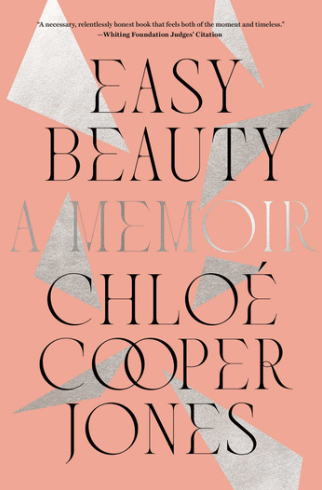
This book is about the experience of growing up and living with sacral agenesis, the condition of being born without a sacrum. In the case of the author, it affects her gait and stature, and causes daily pain as she moves through the activities of life.
The first scene, in which she converses with two peers who suffer from depression, illustrates the loneliness and hostility that come with having a visible disability–her friends announce they’d rather be dead, and she should too. We go back in time and learn all the mental gymnastics and coping strategies that Jones developed for surviving in a world that feels this way about her body. Eventually, she realizes that she needs more than survival, for the sake of herself and her son. She needs a clear conception of her own identity and to clear away the habit of making herself smaller for the comfort of others.
As a philosophy student and professor, she has several theoretical lenses through which she can explore her identity, her body, her relationships, and culture’s attitude toward disability. She travels the world, still coping with pain, seeking answers to her questions about living and mothering in a body that’s often overlooked or despised. When she’s on a journalistic assignment and encounters the actor Peter Dinklage, the blatant ableism they experience at an industry party is astounding. The scene shows how talent and fame can’t protect a person from our culture’s bias against the disabled.
Jones illustrates the depth and richness of her intellect, her lived experiences, and her relationships. It’s a personal story of coming to terms, but it’s also a manifesto for the disabled about claiming space and claiming selfhood.
Here is a interview with Cooper Jones.

 A Therapist's Book Club